
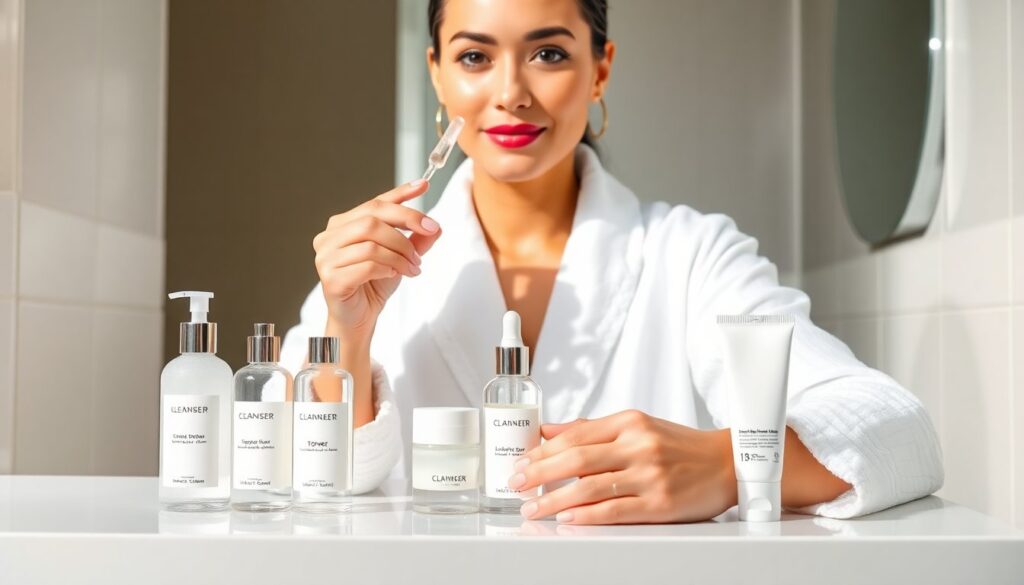
How to layer skincare products correctly matters for results. This guide shows the proper order, the reason for each step, and simple rules to follow. The instructions help products absorb and reduce irritation. The reader will get clear steps they can use in morning and night routines. The guide uses plain language and short steps for easy use.
Key Takeaways
- Properly layering skincare products starts with cleansing, toning, and priming to prepare skin for better absorption and reduced irritation.
- Apply products by texture from thin to thick—start with water-based serums, then oil-based treatments, and finish with creams and sunscreen.
- Use active ingredients in order of priority, placing targeted treatments like vitamin C serum before moisturizers for maximum effectiveness.
- Avoid layering heavy oils first since they block water-based products; oils should be applied after serums to ensure penetration.
- Patch test potent actives and introduce new products slowly to monitor reactions and prevent irritation or breakouts.
- Always finish your morning routine with sunscreen to protect skin from sun damage and preserve the benefits of other skincare products.
Prep: Cleanse, Tone, And Prime Your Skin
Cleanse skin first. Cleansing removes oil, dirt, and sunscreen. Use a gentle cleanser that fits skin type. He or she with dry skin should use a cream cleanser. He or she with oily skin should use a foaming or gel cleanser.
Tone skin next. A toner balances pH and removes leftover residue. Apply toner with a cotton pad or press it in with fingers. If a toner contains acids, use it after cleansing and before serums.
Prime skin last. A primer or light hydrator prepares skin for treatment products. Use a water-based primer under water-based serums. Use an oil primer under oil-based products.
Start simple when building a routine. Beginners should focus on clean, tone, prime, then one or two active serums. This method makes results more predictable. For a step-by-step on core routines, readers can follow guidance on how to build a skincare routine.
Avoid common slips. Do not layer heavy oils first. Doing so will block water-based products. If someone wants a basic plan, a simple skincare routine for beginners offers a clear sequence and product examples.
Check product labels. Look for directions that specify use on damp or dry skin. Apply the product as directed. Pat products in rather than rub when skin feels sensitive.
For those who mix morning and night routines, comparing both helps. One useful comparison appears in the morning vs night skincare routine resource. That page clarifies which products work best at each time of day.
Layer Treatments By Texture And Active Priority (Order Of Application)
Apply products by texture from thin to thick. He or she should place water-based serums first. Then apply oil-based treatments and creams. Thick creams sit on top and seal earlier steps.
Follow active priority. Use actives that target a specific issue before general moisturizers. For example, apply vitamin C serum before moisturizer. Apply retinoid after moisturizer if the product directs that order. When two strong actives could cause irritation, separate them by morning and night or alternate days.
Order example for morning: cleanse, hydrate serum, vitamin C, moisturizer, and then sunscreen. Order example for night: cleanse, exfoliant or acid, retinoid or treatment serum, moisturizer, and occlusive if needed.
Place actives in the order that maximizes absorption. Acids and exfoliants should get first access to skin after cleansing. Antioxidants work best on clean skin. Moisturizers lock in the actives.
People with acne or oil-prone skin should choose lighter textures and non-comedogenic formulas. A focused plan for acne helps. See the guide on skincare routine for acne prone skin for product choices and timing.
People with dry skin should layer heavier hydrating products and then an occlusive. The page on skincare routine for dry skin gives sample steps and product types.
People with oily skin should use thin serums and lightweight moisturizers. The skincare routine for oily skin simple guide offers a minimal list for this type.
Test new combinations slowly. Apply one new product at a time and wait three to seven days. Track redness, peeling, or breakouts. If irritation appears, stop the newest product and allow skin to recover.
Use patch tests for potent actives. Apply the product behind the ear or on the inner forearm for 48 hours. If no reaction occurs, proceed to full-face use.
When mixing acids and retinoids, separate use by time of day. Use acids in the evening two to three times weekly and retinoids on alternate nights if skin tolerates them. This schedule limits irritation and preserves efficacy.
Sunscreen, Makeup, And Troubleshooting Common Layering Mistakes
Always finish morning routine with sunscreen. Sunscreen protects results from actives and limits sun damage. Apply sunscreen as the last skincare layer and before makeup. Reapply sunscreen every two hours if exposed to sun.
Place makeup after sunscreen. Wait for sunscreen to absorb for one to two minutes, then apply makeup. If a sunscreen pills, check for ingredient conflicts. Switching primer or using less product can stop pilling.
Common mistake: applying heavy oils before serums. Heavy oils block penetration. Apply oils after water-based serums.
Common mistake: using too many active products at once. Too many actives cause irritation. He or she should use one active at a time and add others slowly.
Common mistake: skipping patch tests. Patch testing prevents larger reactions. He or she should test each new active for 48 hours on a small skin area.
If layering causes breakouts, simplify the routine. Remove nonessential products for two weeks. Reintroduce one product each week and watch for reactions. The beginner skincare mistakes to avoid article lists frequent errors and fixes.
If sensitivity appears, choose fragrance-free and low-concentration actives. If redness persists, stop the active and consult a dermatologist. A professional can recommend an adjusted order or prescription options.
If sunscreen interferes with makeup, try tinted mineral sunscreens or sunscreens that blend with primer. For active guidance and full routine templates, the korean skincare routine simple version supplies examples of layered steps and gentle options.
Keep records of products and timing. A simple log helps identify which product causes an issue. This log reduces guesswork and speeds problem solving.