
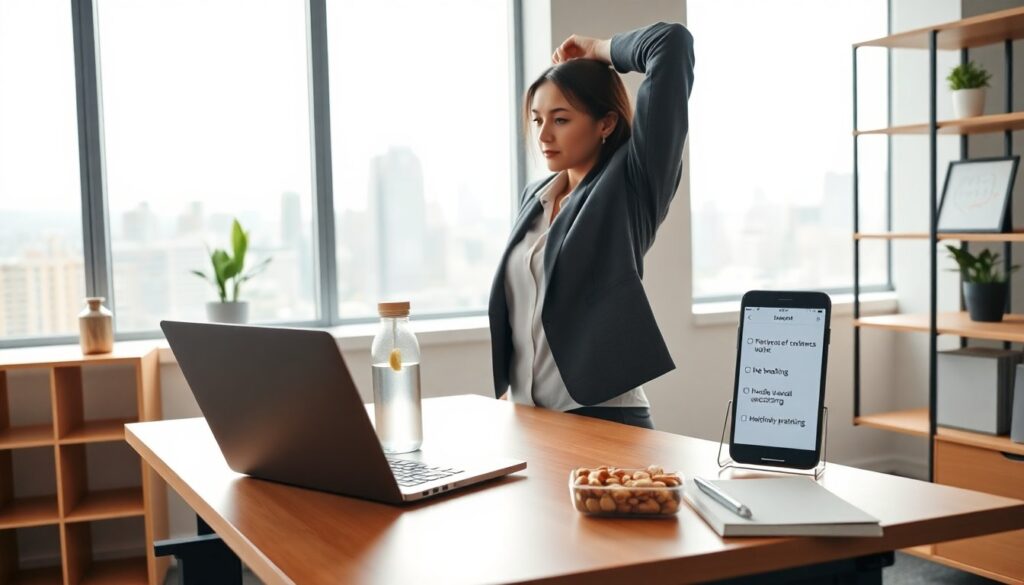
wellness tips for busy lifestyle help people keep energy and focus when schedules fill up. This guide gives short, clear actions. Each action fits short breaks and tight days. The reader will find quick wins that build into steady gains.
Key Takeaways
- Incorporate micro habits like drinking water upon waking and stretching every 30 minutes to quickly boost energy during a busy day.
- Choose balanced meals and smart snacks, such as protein-rich foods and nuts, to maintain steady focus and avoid energy crashes.
- Use short, desk-friendly movement routines every hour to reduce stiffness and improve alertness without disrupting workflow.
- Practice simple stress management techniques like writing down thoughts and naming feelings to clear mental clutter effectively.
- Maintain consistent sleep habits by setting regular wake times and removing screens 30 minutes before bed to enhance sleep quality and next-day energy.
- Link new wellness habits to existing daily actions to ensure consistency and build lasting routines for a busy lifestyle.
Micro Habits That Boost Energy In Minutes
Short habits can raise energy fast. The reader can use micro habits that take one to five minutes. For example, he drinks a glass of water first thing after waking. She opens a window for fresh air. They stand and stretch after every 30 minutes of sitting. These moves raise alertness and metabolic rate.
A small food habit helps too. He eats a protein-rich snack mid-morning to avoid energy dips. She swaps one sugary snack for a handful of nuts. These swaps support steady blood sugar and clear thinking.
A brief breathing routine helps with stress and energy. The worker inhales for four seconds, holds for two, and exhales for six seconds twice. This routine calms the nervous system and restores focus.
Micro habits work when the person repeats them daily. The reader can link a new habit to an existing action. For instance, he drinks water after brushing teeth. She stretches after sending an email. This linking makes the new habit stick.
For more tips on small daily changes, the reader can review simple ways to boost energy naturally.
Nutrition Shortcuts For Sustained Focus
Good food choices support long work periods. The reader can plan simple meals that balance protein, fat, and fiber. He prepares overnight oats with yogurt and seeds for a fast breakfast. She packs a salad with chickpeas and olive oil for lunch. These meals slow digestion and provide steady fuel.
Smart snacks matter. The worker chooses Greek yogurt, fruit, or a small trail mix. These snacks prevent crashes and keep the mind clear. They avoid heavy meals that cause drowsiness.
Hydration links to alertness. The person sets a small bottle at their desk and sips regularly. He adds a slice of lemon to improve taste. She tracks her intake with short timers or an app.
When time is tight, batch cooking saves minutes. The planner cooks proteins and grains once for several days. They assemble quick bowls in the morning. For newcomers, a guide on a daily routine for productivity and health can help set simple meal rhythms.
The reader can also follow basic grocery rules: pick whole foods, avoid ultra-processed items, and include vegetables at meals. These rules make focus easier over the workday.
Movement Routines You Can Do Anywhere
Short movement breaks reduce stiffness and boost mood. The reader can do three to five exercises in small slots between tasks. Each routine uses body weight and needs little space.
They should aim for movement every 60 minutes. He stands, marches, and swings his arms for one minute. She does ten bodyweight squats before a meeting. These actions keep blood flowing and sharpen attention.
For guided ideas, readers can explore a daily wellness routine for beginners.
Desk‑Friendly Mobility Sequence
The reader can use a short desk sequence. He sits upright and flexes his feet ten times. She rolls her shoulders backward five times. They perform neck tilts left and right for five breaths each side.
Next, the worker stands and does two lunges per leg. The person then reaches overhead and bends to each side. These moves loosen hips and spine in three minutes.
If the reader wants a simple beauty and prep routine that fits busy days, the short steps in a quick beauty routine before work can pair well with this mobility flow.
Consistency makes these moves effective. The reader sets a timer or pairs the sequence with a regular task, like a phone call. Repeating the sequence reduces pain and improves posture over time.
Practical Stress Management And Sleep Hacks
Stress drains energy and focus. The reader can use simple stress tools that fit small breaks. He writes three items on a paper to release mental load. She names one feeling to ground herself. These steps reduce rumination and free mental space.
For sleep, the person keeps a regular wake time. He turns off screens 30 minutes before bed. She uses low light and a cool room to help sleep onset. These changes improve sleep depth and next-day energy.
Short pre-sleep rituals work well. The reader reads a page of a book, drinks warm herbal tea, or practices one five-minute breathing cycle. These rituals signal the body to relax.
To sustain new habits, the reader studies how others keep habits over time. A piece on how to stay consistent with healthy habits offers practical steps for habit maintenance.
When stress rises, the worker can use one quick action: a two-minute walk outside. That move lowers cortisol and resets perspective.
For broader daily structure that includes stress and sleep tips, the reader might view healthy lifestyle tips for beginners.