
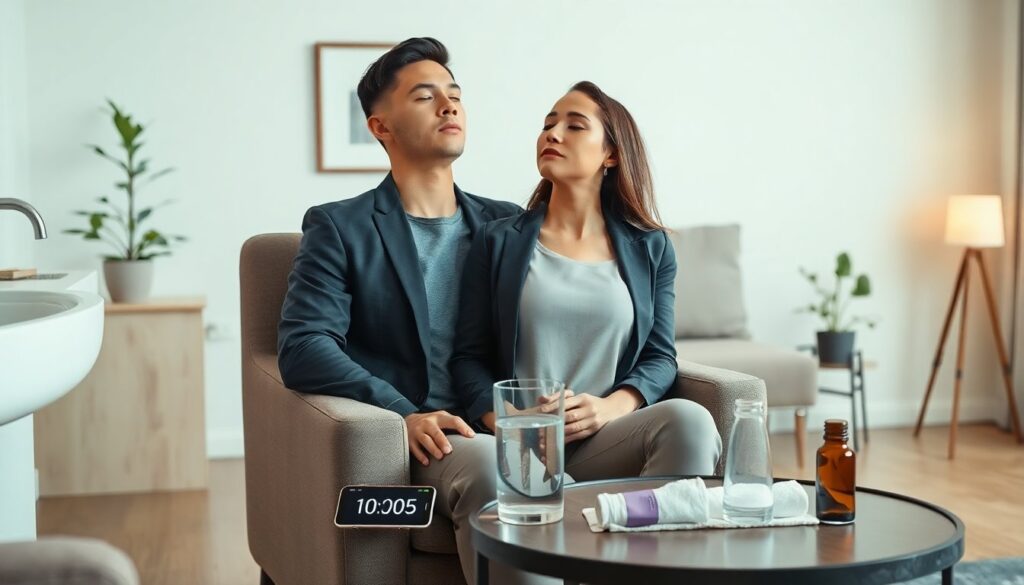
How to reduce stress quickly at home helps people regain control in minutes. The guide shows fast, simple actions that lower heart rate and clear the mind. It lists breathing, movement, sensory shifts, and short routines that fit tight schedules. It uses clear steps and short explanations. It avoids jargon and gives practical choices for any room in the house.
Key Takeaways
- Practicing controlled breathing like the 4-4-8 method quickly lowers heart rate and signals calm to reduce stress at home.
- Combining short breathwork with progressive muscle release provides effective stress relief in as little as three to five minutes.
- Incorporating sensory shifts such as a cold splash on the face or calming scents can instantly interrupt stress responses.
- Establishing daily micro-breaks and a morning anchor routine helps prevent stress from building over time.
- Maintaining a tidy environment and optimizing sleep quality support overall stress reduction and enhance quick techniques.
- Regular practice of these easy, at-home methods ensures quicker and more reliable stress relief during tense moments.
Immediate 3-Minute Techniques To Lower Stress Right Now
People can reduce stress quickly at home with short, focused actions. They can use breath, touch, sight, and posture. These actions work in three minutes or less. They help the body stop producing excess adrenaline and cortisol.
Start with breath. They should sit or stand with a straight spine. They should inhale through the nose and exhale through the mouth. When people practice how to reduce stress quickly at home, breath control lowers heart rate in under a minute. The same breath pattern also signals the brain to relax.
They can add a cold splash to the face. Cold water activates the dive reflex and slows the heart. A short cold wash reduces panic and helps people reset. When people need another quick option, they can change posture. They should roll the shoulders back and lift the chest. Good posture changes breathing and mood fast.
People can use scents to cut stress. A few drops of lavender on a tissue or a short inhale of citrus shifts attention. Smell links directly to emotion centers. This change helps when people want to reduce stress quickly at home before a task.
Practical note: they should pick two techniques and practice them twice a day. Repetition makes any quick action more reliable in a real stressful moment. When the time comes, they will use the technique with less thought and more effect.
Links: Many readers pair short stress tools with broader daily work. They can read about how to improve mental health naturally for longer-term habits. They can also explore simple ways to boost energy naturally to support recovery after stress.
How To Do The 4-4-8 Breathing And A Simple Progressive Muscle Release
4-4-8 breathing gives clear timing that the body can follow. They should sit upright and relax the shoulders. They inhale through the nose for four counts. They hold the breath for four counts. They exhale slowly through the mouth for eight counts. People repeat this cycle three times. This pattern slows the heart and signals calm. When people practice 4-4-8, they lower the immediate feeling of stress.
Progressive muscle release takes two minutes. They start with the feet. They tense the feet for five seconds. They release and notice the change. They move to the calves, thighs, buttocks, stomach, hands, shoulders, and face. They tense each group for five seconds, then release. The release sends a clear contrast to the nervous system. People who do this pattern report faster relief.
A combined short routine works well. They do two rounds of 4-4-8 breathing. They follow with progressive muscle release for two minutes. This routine totals about five minutes. It fits most breaks and it scales down to three minutes if needed. When people use this routine often, they can reduce stress quickly at home with steady results.
Links: Readers can pair short practices with a simple morning routine for mental health to prevent stress build-up. They can also try ideas from self care routine ideas at home to make practice stick.
Quick Daily Routines And Simple Home Tweaks To Prevent Stress From Building
They lower stress quickly at home when they change small daily habits. They set short routines that interrupt tension early. They choose three daily actions and repeat them.
First, they create a short morning anchor. The anchor can be two minutes of breath and a glass of water. A short anchor signals the brain that the day starts with care. Pairing this anchor with a simple morning routine for mental health helps maintain calm throughout the day.
Second, they schedule micro-breaks. They pause every 60 to 90 minutes for one minute of breath or movement. These micro-breaks stop stress from building. They also boost focus. People should keep a short list of micro-break moves near their workspace. These moves can include standing, stretching, or a short walk down the hall.
Third, they shape the home environment. They reduce clutter on one surface. They add a small plant or a soft lamp. These simple changes lower visual stress and make recovery faster. People can follow self care routine ideas at home for low-effort tweaks.
They also manage sleep and energy. They avoid heavy screens before bed. They keep a consistent sleep window. They use wellness tips for busy lifestyle to match routines to a packed schedule. Good sleep reduces baseline stress and helps the short techniques work better.
For quick grooming and a mood lift, a brief grooming routine helps. They can use a quick beauty routine before work to create forward momentum in the morning. Small acts of care change mood and reduce the chance that stress will grow.
Links: For readers who want daily health choices, the article on simple ways to boost energy naturally offers practical pairings. They can also explore a natural skincare routine at home for calm rituals.